

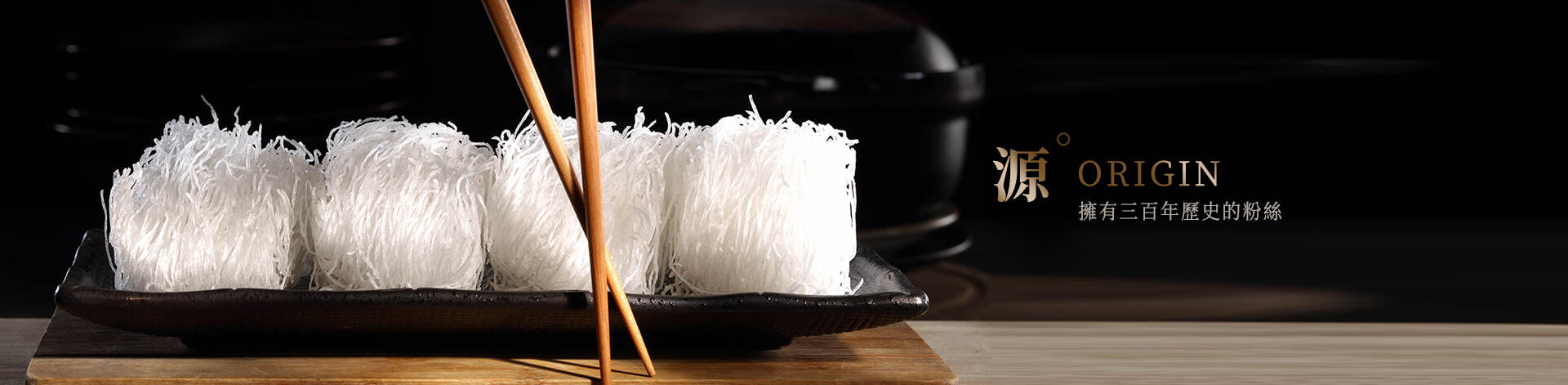
Origin of Vermicelli
Origin of Cellophane noodles Cellophane noodles call it Glass noodles, and its name can also be called bean noodles, soup noodles or vermicelli. During the Japanese occupation period, Japanese people called it Chunyu and bean noodles, which were one of the important items for people's livelihood consumption. In the early days, there was no vermicelli production in Taiwan because of the production of vermicelli. Mung beans, broad beans, peas, potatoes, cassava, corn and other grains were not grown in Taiwan, and the raw materials needed had to be imported. In addition, during the Japanese occupation of Taiwan The food industry is not developed, so there has been no production of fans, and fans are imported from Shandong to Taiwan via Shanghai and Xiamen. In the thirty-eighth year of the Republic of China, Mr. Wang Shulin and the fan maker who followed him came to Taiwan from Shandong, brought the fan production technology and set up a factory to manufacture, only then did Taiwan-made winter noodles appear. Shandong is rich in mung beans, and the quality of mung beans ranks first among beans. "People make bean porridge and bean rice, or as bait for moxibustion, or as flour for grinding noodles, or as a surface material. Its taste is sweet but not cooked, and it is quite detoxifying. It is a good valley to help the world.” Mung beans also contain unsaturated acids and oligosaccharides (which are not easily absorbed by the body and converted into glucose), which are indispensable and important raw materials for the manufacture of winter noodles. Therefore, the handicraft industry of Shandong winter noodles is developed and is one of the important export products. Due to the convenient railway and land transportation, Hong Kong has become a distribution center for goods. The name "Longkou Fans" is generally referred to as fans made in Shandong, just like the rice noodles produced in Hsinchu area use "Hsinchu Rice Noodles".
|
